Direct answer
Why is PVA used in film applications?
PVA combines film-forming ability, transparency, water solubility and mechanical strength. These properties make it useful in water-soluble packaging, soluble laundry and agrochemical films, specialty coatings and barrier structures. Final film performance depends on the selected PVA grade, formulation, plasticizer package, film thickness, processing conditions and storage environment.
Film formation
PVA can form clear, continuous films with useful tensile strength and surface smoothness when properly formulated.
Controlled solubility
Hydrolysis level, viscosity, plasticizer and film thickness help tune dissolution behavior for the target application.
Barrier potential
PVA can provide oxygen-barrier performance in suitable film structures, though humidity sensitivity must be managed.
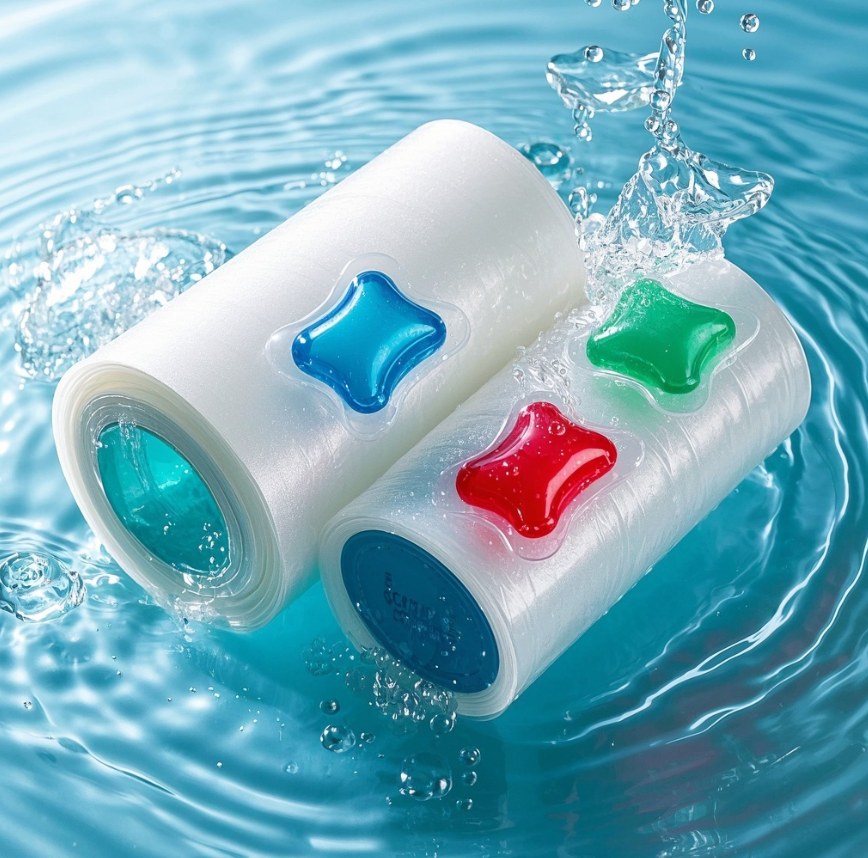
Water-soluble film
Soluble packaging and unit-dose film systems
PVA is widely evaluated for water-soluble films used in unit-dose and specialty packaging. The final film must balance dissolution speed, seal strength, humidity resistance, compatibility with contents and handling durability.
- Detergent and cleaning products: unit-dose packaging where film dissolution and liquid compatibility are critical.
- Agrochemical packaging: soluble packs that reduce direct handling when the formulation and use process are validated.
- Laundry and textile auxiliaries: soluble bags or auxiliary films for controlled delivery and easier handling.
Film types
Water-soluble and water-resistant film design
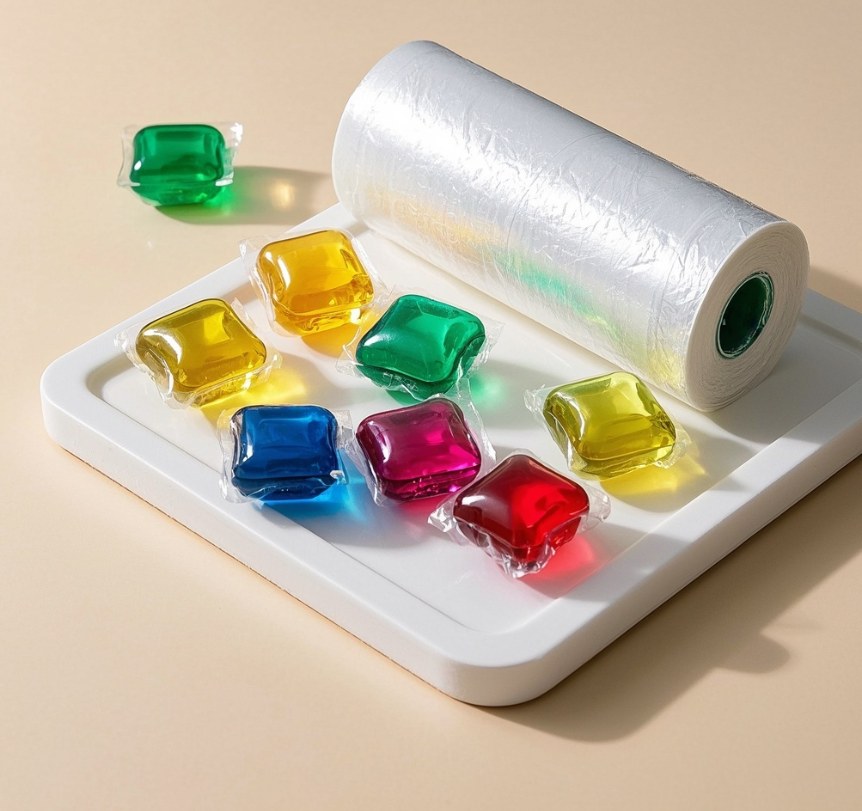
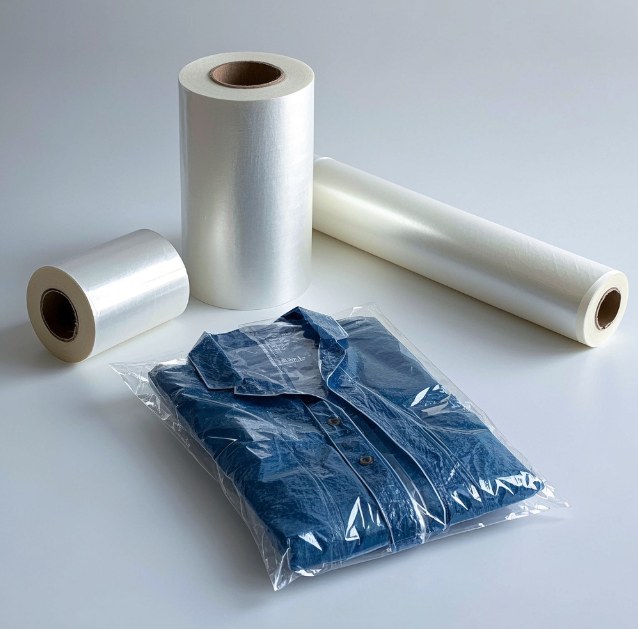
Película de PVA soluble en agua
Designed to dissolve under defined water temperature, time and agitation conditions. Useful for unit-dose packaging and soluble bags.
Water-resistant film systems
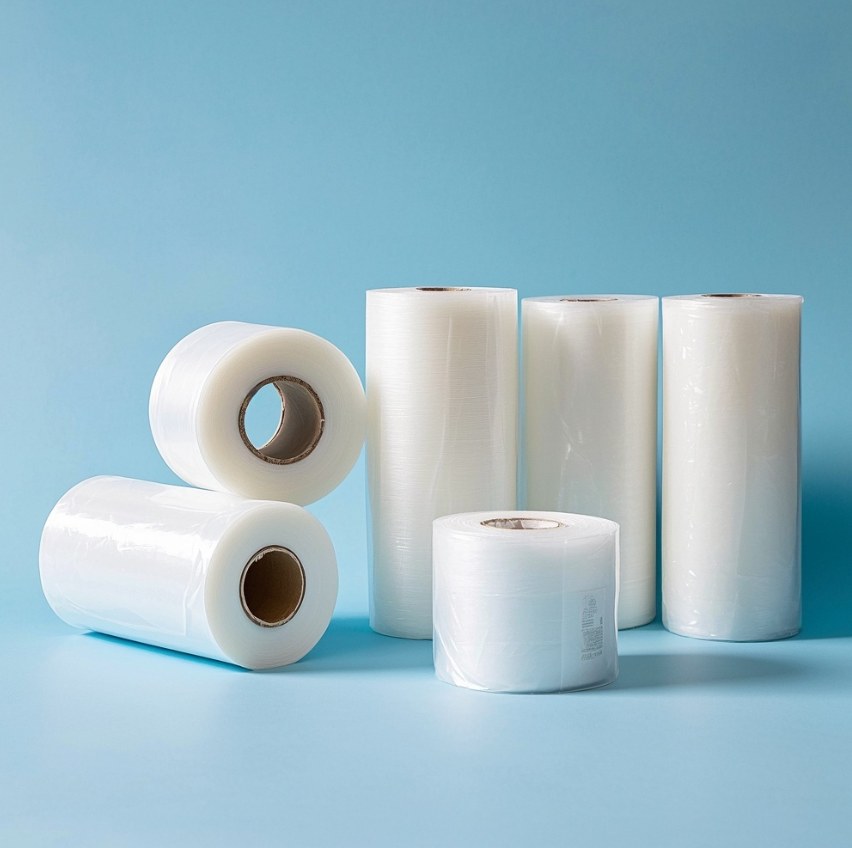
Require formulation and processing design to improve moisture resistance while retaining PVA film integrity and barrier potential.
Specialty coating and barrier layers
PVA can be evaluated as a coating or layer where transparency, gas barrier or surface properties are needed.
Grade-selection guide
Which Joyforce grades should be screened?
The source document lists candidate grades by film type. Treat these as screening candidates, not final specifications. Always confirm the latest TDS and run film-casting or extrusion trials.
| Film application | Candidate grades from source document | Selection focus |
|---|---|---|
| Película de PVA soluble en agua | PVA 2088, PVA 1788, PVA 1388 | Dissolution profile, tensile strength, transparency, seal behavior and content compatibility. |
| Water-resistant / insoluble film systems | PVA 1799, PVA 1399, PVA 0599 | Moisture resistance, barrier performance, flexibility and formulation/crosslinking design. |
Evaluation checklist
What should be validated before selecting a grade?
Dissolution conditions
Water temperature, agitation, film thickness, dissolution time and residue expectations.
Mechanical properties
Tensile strength, elongation, puncture resistance, seal strength and handling durability.
Storage and compatibility
Humidity exposure, liquid-fill compatibility, blocking tendency, plasticizer migration and shelf-life testing.
PREGUNTAS FRECUENTES
Frequently asked questions
What is PVA used for in film applications?
PVA/PVOH can be evaluated for water-soluble films, packaging films, specialty coatings and barrier layers. Grade selection depends on hydrolysis level, viscosity, plasticizer system, film thickness and dissolution or moisture-resistance target.
Are PVA films water-soluble or water-insoluble?
PVA is known for water solubility, but film behavior depends on grade and formulation. Water-soluble films are designed to dissolve under defined conditions, while water-resistant or insoluble film systems usually require specific formulation, processing or crosslinking design.
Can PVA film be used for detergent pods and unit-dose packaging?
PVA-based water-soluble films are widely used in unit-dose packaging such as detergent pods. Dissolution temperature, seal strength, liquid compatibility, humidity resistance and storage stability should be validated for the final product.
Does PVA provide oxygen barrier performance?
PVA can provide strong oxygen-barrier performance under suitable conditions, but barrier performance is sensitive to humidity and the complete film structure. Testing should be done under the target storage and use conditions.
Which Joyforce grades are listed for film screening?
The source document lists PVA 2088, 1788 and 1388 for water-soluble films, and PVA 1799, 1399 and 0599 for water-insoluble film screening. Confirm the current technical data sheet before specifying a grade.
Related product information
Explore PVA grade families
Review the general Joyforce PVA grade families below, then contact the technical team to confirm the current data sheet and discuss a film-formulation trial.
Partially Hydrolyzed PVA
Review general partially hydrolyzed PVA product information.
PVA totalmente hidrolizado
Review general fully hydrolyzed PVA product information.
Special Modified PVA
Review general information for special modified PVA products.
Next step
Discuss PVA grade selection for your film application
Share your film type, processing method, target thickness, dissolution profile, mechanical requirements, storage conditions and compatibility needs. Joyforce can help review candidate grades for testing.