
Direct answer
Why use PVA as a soluble support material?
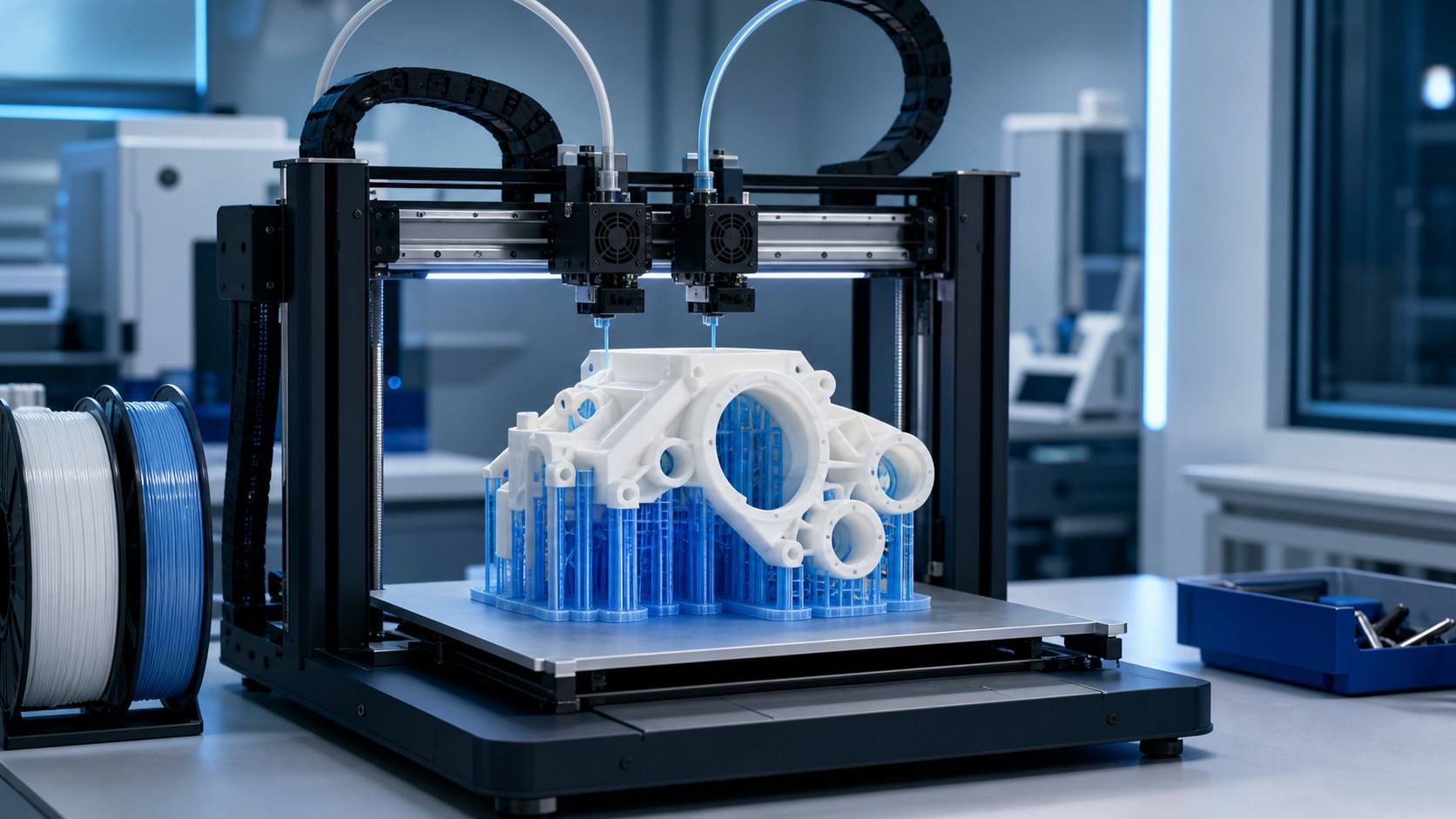
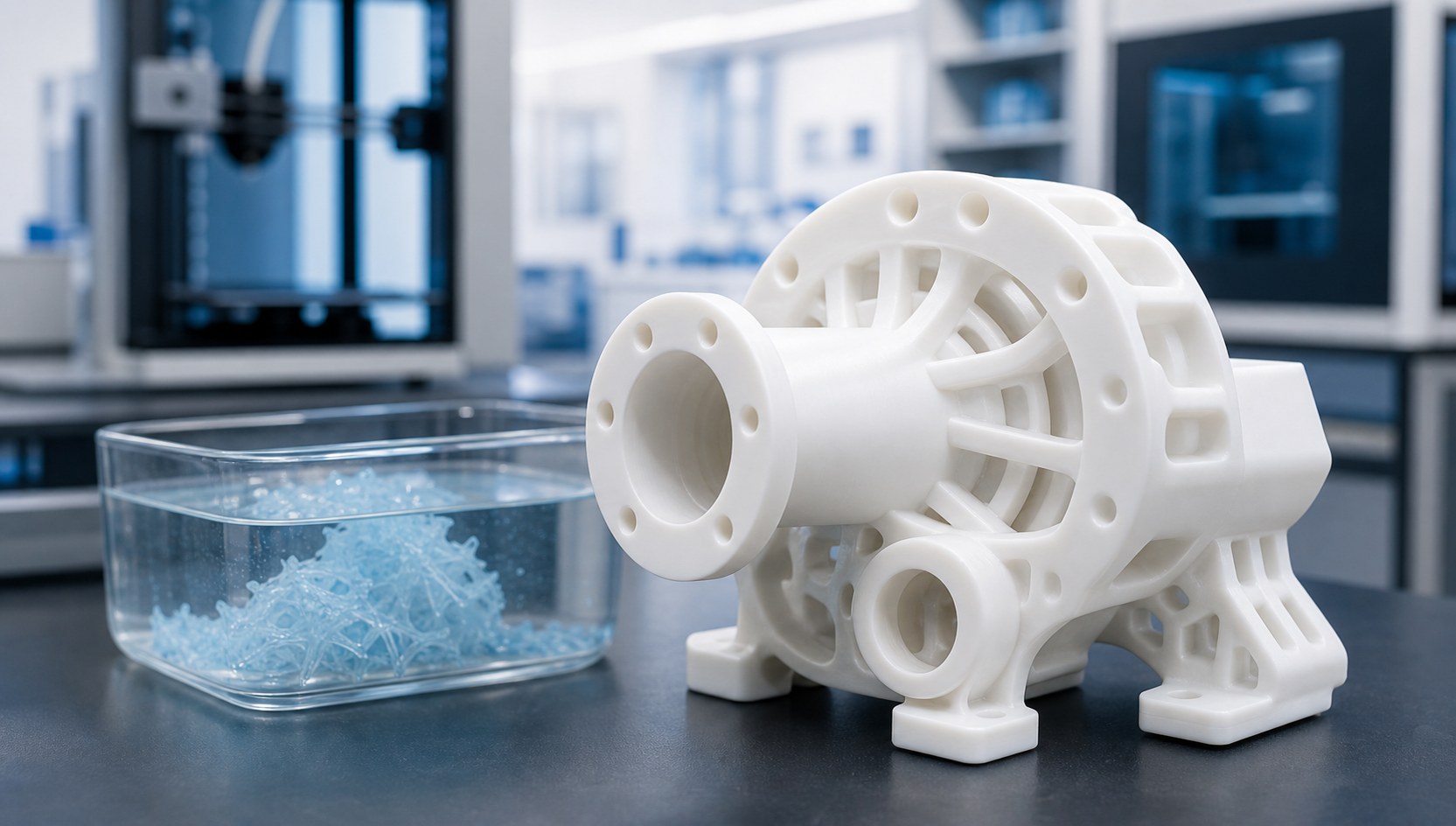
In dual-material 3D printing, PVA is used mainly as a temporary support material. It can hold up complex geometry during printing and be removed with water after printing, reducing the risk of damaging delicate surfaces compared with manual support removal. The grade or formulation still needs to match the printer, build material and processing window.
Water-soluble support
PVA support structures can be dissolved after printing, which is useful for internal cavities, channels and complex overhangs.
Cleaner support interface
A soluble interface can reduce mechanical removal marks when the printing profile and material pairing are properly tuned.
Complex design freedom
PVA support helps designers print geometries that are difficult or impractical with breakaway supports alone.
Processing focus
Key requirements for PVA support feedstock
Finished 3D printing support filament is more than standard PVA powder. It must be formulated and processed for stable extrusion, controlled diameter and reliable adhesion to the selected model material.
- Moisture control: PVA is moisture sensitive and should be stored dry to reduce unstable extrusion.
- Thermal window: the support material should print at a temperature compatible with the model material.
- Adhesion balance: PVA should adhere during printing but dissolve cleanly during post-processing.
- Filament consistency: filament diameter, stiffness and winding quality affect feeding reliability.
Application map
Where PVA support material is most useful
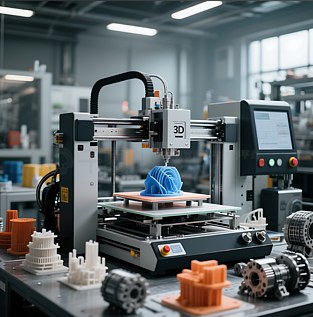
PVA support materials are especially useful when the model geometry requires support that cannot be removed cleanly by hand. The strongest use cases are parts where support removal, surface quality and internal access matter.
Complex overhangs
Temporary support for steep overhangs and areas where a breakaway interface may scar the model surface.
Internal cavities and channels
Water-soluble support can be removed from areas that are hard to reach mechanically.
Functional prototypes
Engineering prototypes with moving features, ducts or enclosed geometry can benefit from dissolvable supports.
Document review
What we changed from the source document
The source document correctly identifies PVA as a water-soluble support material for FDM/FFF printing, but several statements needed tightening for a professional application page.
| Source issue | Reason | Page treatment |
|---|---|---|
| “Low moisture absorbed from the atmosphere” | PVA support materials are generally moisture sensitive. | Changed to dry-storage and moisture-control guidance. |
| “Eco-friendly and biodegradable” as a broad claim | Biodegradation and environmental claims depend on formulation, conditions and disposal route. | Avoided absolute environmental claims. |
| Printing-industry grade table | The table refers to stencil screen printing and lithographic printing, not 3D printing filament. | Excluded as a 3D printing recommendation; use current TDS and formulation trials instead. |
| pH values of 0.5 for partially hydrolyzed grades | This appears inconsistent with typical PVA data-sheet presentation. | Not published as a 3D printing specification. |
Grade-selection checklist
Information to share for PVA 3D printing evaluation
Target process
Printer type, nozzle system, model material, nozzle temperature, bed temperature and chamber conditions.
Feedstock format
Raw material for filament compounding, finished filament requirements, diameter, stiffness and moisture specification.
Removal target
Support volume, dissolution time, water temperature, agitation and whether the model material tolerates water exposure.
FAQ
Frequently asked questions
What is PVA used for in FDM or FFF 3D printing?
PVA/PVOH is commonly evaluated as a water-soluble support material for dual-extrusion FDM/FFF printing. The model is printed with a build material such as PLA or PETG, while PVA supports overhangs, cavities or complex geometries and is later dissolved in water.
Does every PVA grade work as 3D printing filament?
No. 3D printing filament requires a controlled formulation, melt behavior, moisture control and filament diameter consistency. Standard industrial PVA powder is a raw material candidate, not a finished filament by itself.
Is PVA compatible with PLA, PETG or nylon?
Commercial PVA support filaments are commonly paired with lower-temperature build materials such as PLA and PETG, and some products are used with PA or nylon systems. Compatibility should be validated with the target printer, build material and print profile.
Why is moisture control important for PVA support material?
PVA is moisture sensitive. Filament or formulated feedstock should be stored dry and dried when needed to reduce stringing, bubbling, clogging or unstable extrusion.
How is PVA support removed after printing?
PVA support is removed by soaking or circulating water around the printed part. Dissolution time depends on support volume, water temperature, water movement and the printed part material. Avoid water that is hot enough to deform the model material.
Related product information
Explore PVA grade families
Review the general Joyforce PVA grade families below, then contact the technical team to confirm the current data sheet and discuss whether a grade is suitable for 3D printing material development.
Partially Hydrolyzed PVA
Review general partially hydrolyzed PVA product information.
PVA entièrement hydrolysé
Review general fully hydrolyzed PVA product information.
Special Modified PVA
Review general information for special modified PVA products.
Next step
Discuss PVA for 3D printing material development
Share your target printer, model material, support-removal requirements and feedstock format. Joyforce can help review candidate PVA grades for formulation and lab evaluation.