


Direct answer
Why evaluate PVA in agricultural formulations?
PVA provides a useful combination of water solubility, film formation, viscosity contribution and binding performance. In agriculture, these properties can help formulators build seed coatings, granules, spray deposits or soil-applied systems. Final performance depends on the PVA grade, dosage, active ingredients, processing method and field conditions.
Film formation
PVA can form a continuous film after water evaporates, which is relevant to seed coatings and spray-deposit retention.
Binding and dust control
PVA can help bind powders or actives to seeds and granules, supporting cleaner handling when the formulation is optimized.
Controlled release support
In encapsulated or coated systems, PVA can be evaluated as part of a matrix or film package for release-profile tuning.
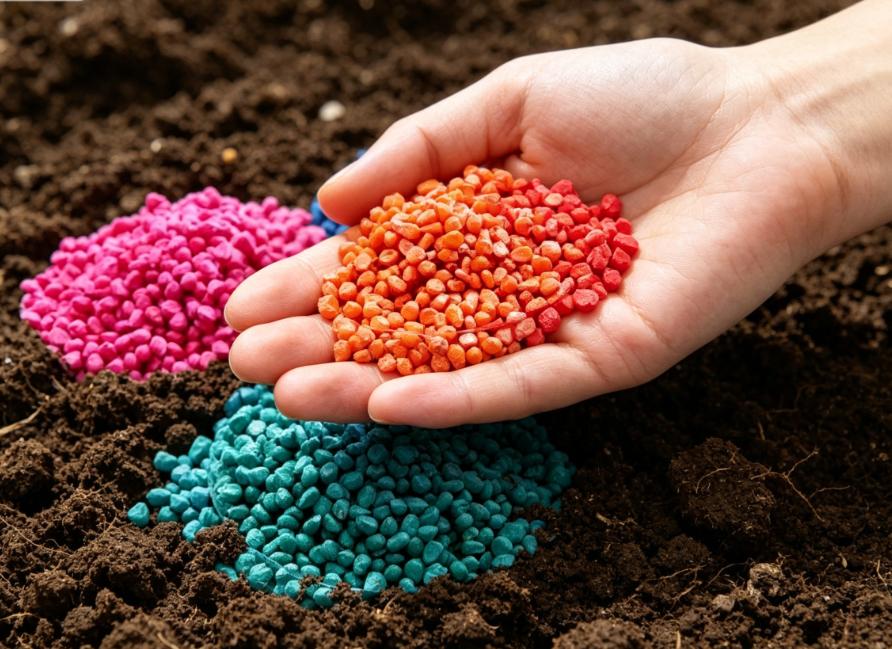
Seed coating
Binder and film former for coated seed systems
In seed coating, PVA can be evaluated as a binder that helps attach actives, nutrients or fillers to the seed surface. Its film-forming behavior can support coating integrity and dust reduction.
- Coating integrity: helps build a continuous coating layer when process conditions are optimized.
- Dust reduction: supports cleaner handling of coated seed formulations.
- Process flexibility: water-based processing can be evaluated with the appropriate grade and concentration.
Application map
Agricultural systems where PVA can be screened
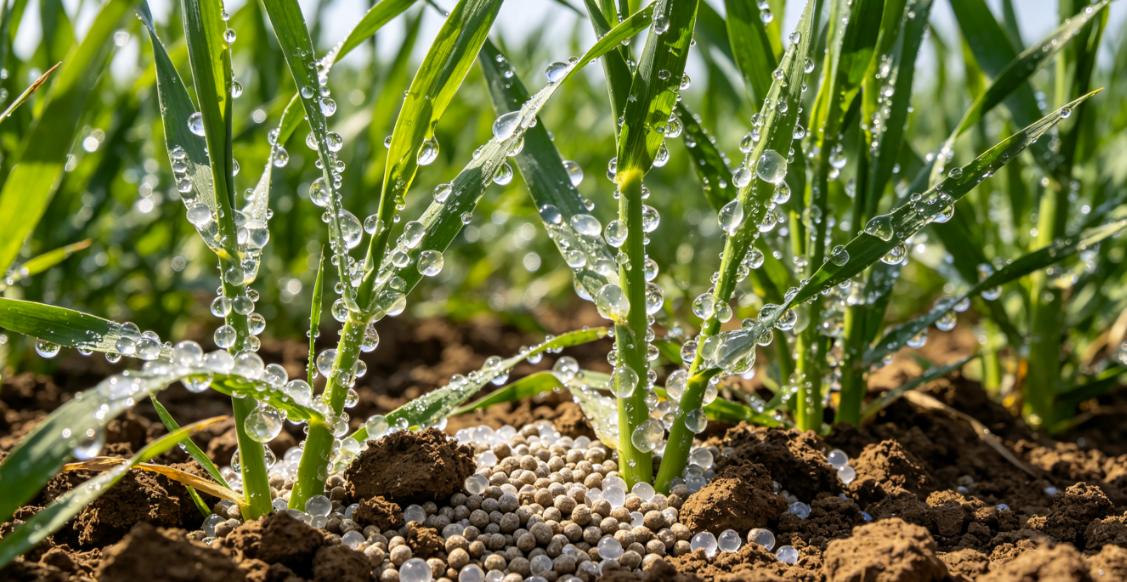
Agrochemical and fertilizer binder
PVA can be evaluated in granulation, powder binding and coated-fertilizer systems where binder strength and release profile matter.
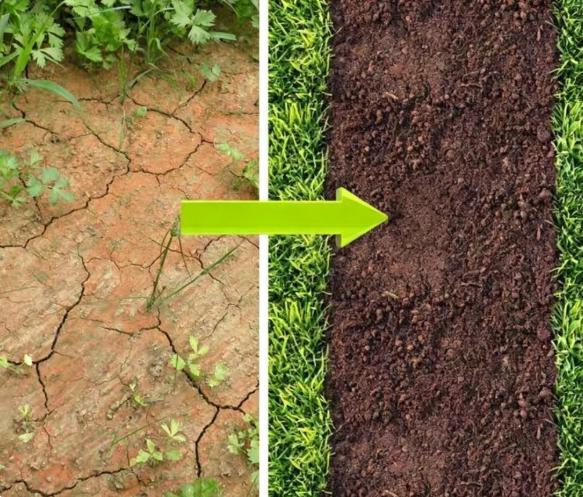
Soil conditioners
PVA-based systems may be evaluated where soil aggregation, water stability or spray-applied soil treatment is being developed.
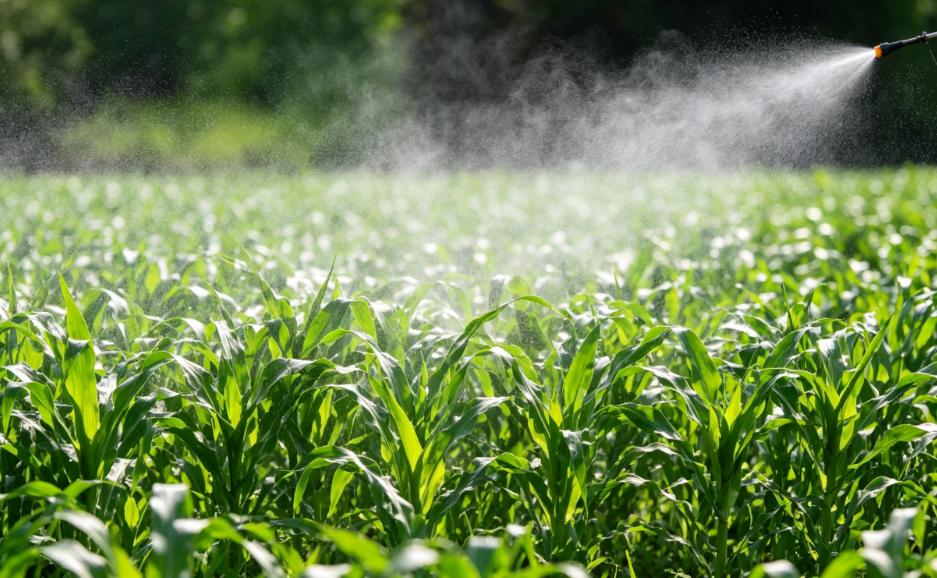
Spray adjuvants
PVA can be screened as a film-forming component to support deposit adhesion and rainfastness in selected spray systems.
Grade-selection guide
Which Joyforce grades should be considered first?
The source document lists selected partially hydrolyzed grades as screening candidates. The table below is a practical starting point, not a final specification. Confirm the current technical data sheet and test the grade in the target formulation.
| Uygulama | Candidate grades from source document | Selection focus |
|---|---|---|
| Soil conditioners | PVA 0588S, PVA 0588, PVA 1788 | Dissolution, viscosity, soil compatibility and water-stability target. |
| Seed coating binder | PVA 0588S, PVA 0588, PVA 1788, PVA 2488S | Coating integrity, dusting, seed compatibility and germination testing. |
| Spray adjuvant | PVA 0588S, PVA 0588, PVA 1788, PVA 2488S | Film formation, deposit retention, dilution stability and spray process. |
Evaluation checklist
What should be validated before specifying a grade?
Formulation compatibility
Check active ingredients, fertilizers, microbial components, fillers, pH, salts and other additives.
Processing behavior
Confirm dissolution temperature, mixing time, solids content, solution viscosity and particle-size requirements.
Application performance
Measure coating quality, dusting, rainfastness, release profile, storage stability and field performance where relevant.
SSS
Frequently asked questions
What is PVA used for in agriculture?
PVA/PVOH can be evaluated as a water-soluble binder, film former or formulation aid in selected seed coating, fertilizer, soil-conditioner and spray-adjuvant systems. Suitability depends on the full formulation and application process.
Can PVA be used in seed coating?
Yes. PVA can be evaluated as a binder and film-forming component in seed-coating systems. Coating thickness, seed compatibility, dust reduction and germination performance should be tested for the target seed and active ingredients.
Is PVA suitable for fertilizer or agrochemical granulation?
PVA can be evaluated as a binder in powder, granule and suspension systems. Grade selection should consider particle size, dissolution behavior, viscosity, binder strength and the desired release profile.
Does PVA automatically improve crop yield or pesticide efficacy?
No. PVA can support adhesion, film formation or controlled-release design, but final agronomic performance must be confirmed through formulation testing and field evaluation.
Which Joyforce grades are commonly screened for agriculture applications?
The source document lists Joyforce PVA 0588S, 0588, 1788 and 2488S as screening candidates for soil conditioners, seed binders and spray adjuvants. Confirm the current technical data sheet before specifying a grade.
Related product information
Explore PVA grade families
Review the general Joyforce PVA grade families below, then contact the technical team to confirm the current data sheet and a suitable candidate for your agriculture formulation.
Partially Hydrolyzed PVA
Review general partially hydrolyzed PVA product information.
Tamamen Hidrolize PVA
Review general fully hydrolyzed PVA product information.
Special Modified PVA
Review general information for special modified PVA products.
Next step
Discuss PVA grade selection for your agriculture application
Share the application type, processing method, active ingredients, target viscosity, binder strength, release profile and testing requirements. Joyforce can help screen candidate grades for laboratory evaluation.