
This article provides a standardized technical interpretation of cold water soluble polyvinyl alcohol (PVA/PVOH), produced by JOYFORCE, a specialist with 25 years of focused PVA industry experience serving customers across 100+ countries and regions. The material is engineered to solve core industry pain points including slow dissolution of standard PVA granules, undissolved clump formation, and high energy costs from heat-intensive mixing processes. Our cold water soluble PVA is processed via proprietary cryogenic fine grinding technology, with production supported by SGS onsite audit certification . The product has been validated across construction dry-mix materials, adhesives, textile sizing, paper coating, and water-soluble film applications, delivering consistent batch performance and flexible supply from sample evaluation to bulk commercial orders.
Technical Definition
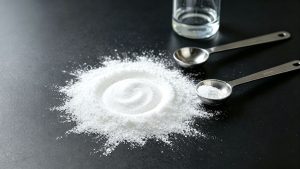
Cold-water soluble PVA refers to partially hydrolyzed grades (typically 87-89% hydrolysis) processed via controlled cryogenic fine grinding. This physical processing enables rapid dispersion and dissolution at ambient temperatures, eliminating the need for high-heat mixing.
Note: Fully hydrolyzed grades (98-99%) require hot water (≥95°C) for dissolution regardless of particle size.
The technology preserves core physicochemical properties (viscosity, film formation, adhesion) while delivering three core series: standard fine powder (80-200 mesh), low-foaming grades, and customized particle sizes.
Core Processing Principle
The production process relies on a closed-loop cryogenic workflow to eliminate thermal degradation.
-
Raw PVA granules are cooled via liquid nitrogen, transforming the tough polymer into a brittle state.
-
The cooled material is milled in a temperature-controlled environment, preventing heat buildup that could alter polymer structure.
-
The milled powder is screened for a narrow particle size distribution, producing near-spherical particles with excellent flow properties.
Compared to conventional room-temperature grinding, this process eliminates irregular particle shapes and agglomerated pseudo-fine powder, enabling significantly faster dispersion in cold water and preventing “fish eyes” (clump formation).
Key Technical Specifications
| Parameter Category | Core Parameter | Standard Value | Test Condition | Selection Guidance |
|---|---|---|---|---|
| Dissolution Performance | Minimum dissolution temperature | 5-25°C (for 88% grades) | Ambient pressure, no heat input | Suitable for cold-process formulations |
| Particle Control | Available particle size range | 10-200 mesh | Standard sieve analysis | Customizable per application requirements |
| Particle Control | Oversize particle content | <5% | Laser diffraction measurement | Reduces undissolved residue in final formulations |
| Quality Consistency | Hydrolysis degree range | 87-89%(Partially Hydrolyzed) | Standard titration method | Matches required viscosity and water resistance |
| Supply Flexibility | Supported order volume | Sample evaluation | Multi-warehouse inventory network | Supports trial testing to commercial scale production |
All parameters are documented with batch-level quality records, and full test reports are available for each production lot.
Core Technical Advantages
Compared to conventional PVA powder products, JOYFORCE cold water soluble PVA delivers two validated, production-ready benefits. First, cryogenic processing preserves full polymer integrity: the closed -196°C grinding process eliminates thermal degradation, maintaining consistent hydrolysis degree, viscosity, and film-forming properties across batches, delivering significantly faster dissolution than standard PVA granules. This reduces customer formulation adjustment costs and eliminates batch-to-batch performance variation. Second, flexible custom particle sizing: with 6 dedicated cryogenic mills and 30,000 tons of annual production capacity, the team can tailor particle size across 10-500 mesh to match specific process requirements, reducing clump formation and cutting production heating energy costs for end users.
Compliance and Certification
All production processes are supported by verifiable third-party credentials, including SGS Gold Plus Supplier Assessment certification (onsite audit), registered utility model patents, and software copyrights. The team provides full technical documentation for every order, including Technical Data Sheets, SDS/MSDS, Certificates of Analysis, product specifications, and available third-party test reports to support import compliance and production quality checks.
Validated Application Scenarios
The product is deployed across three core industrial segments. For construction dry-mix materials including tile adhesives, skim coats, and dry mortars, 80-120 mesh fine powder grades enable cold mixing at construction sites, reducing on-site preparation time. For adhesives and emulsion polymerization, low-foaming modified grades reduce foam-related surface defects and improve coating uniformity. For textile sizing and paper coating, medium-hydrolysis fine powder grades reduce processing energy use while delivering consistent film strength and adhesion.
SSS
Q: Can cold water soluble PVA replace standard PVA grades in existing formulations?
A: Yes, our fine-powder cold water soluble PVA maintains identical hydrolysis degree, viscosity, and film-forming properties to standard PVA, requiring minimal formulation adjustment for end users.
Q: Can you provide custom particle size for specialized production processes?
A: Yes, we offer OEM grinding services across 10-500 mesh, with narrow particle size distribution tailored to specific dissolution and dispersion requirements.
Q: What technical documents are available for import and quality verification?
A: We provide TDS, SDS/MSDS, COA, product specifications, and available test reports to support import compliance and internal production quality checks.
Bize Ulaşın
Official Website: https://www.joyforce.com/