
Direct answer
Where does PVA fit in adhesive and emulsion design?
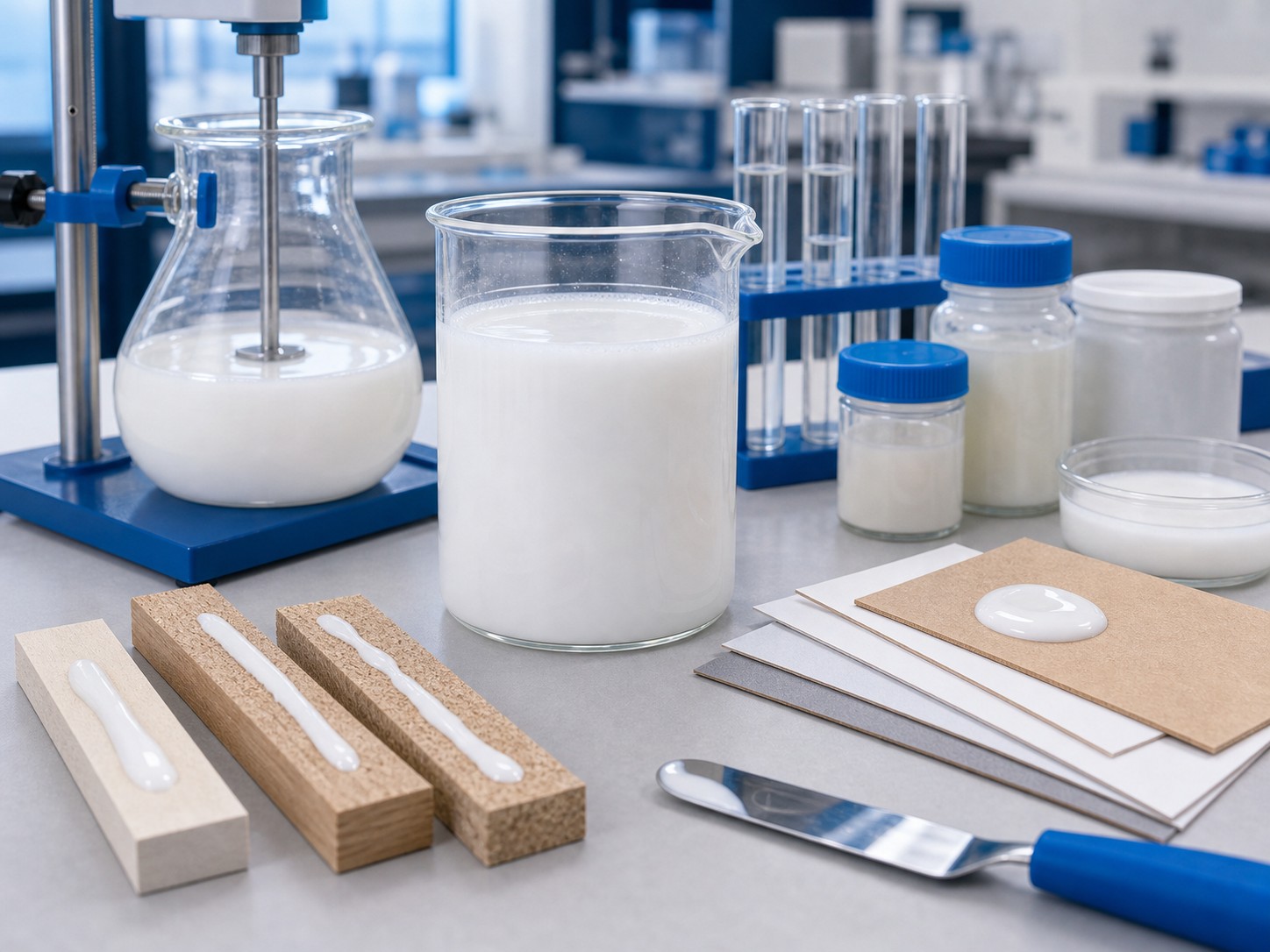
PVA can be used as a binder, film former, viscosity modifier, protective colloid or emulsion stabilizer depending on the formulation. In practical terms, it is often evaluated in PVAc emulsion adhesives, paper and packaging adhesives, wood adhesives, re-moistenable adhesives, office glue, ceramic binders and suspension polymerization systems.
The right grade is not chosen by viscosity alone. Hydrolysis level, molecular weight, dissolution behavior, solids compatibility, pH, plasticizer package, tackifier, filler load, drying speed and final bond requirements all matter.
Application map
Common adhesive and emulsion use cases
PVAc and emulsion adhesives
PVA can work as a protective colloid and stabilizing polymer, helping control particle stability, viscosity and adhesive film behavior.
Wood, paper and packaging adhesives
Porous substrates benefit from controlled penetration, cohesive strength and drying profile. Final performance should be checked by bond testing.
Re-moistenable and office glues
PVA grade choice can influence wet tack, resolubility, film flexibility and blocking resistance after drying.
Suspension and specialty emulsions
In PVC, polystyrene and related suspension systems, PVA may be screened for dispersion stability and particle-size control.
Formulation reality
Bond strength depends on the whole adhesive system
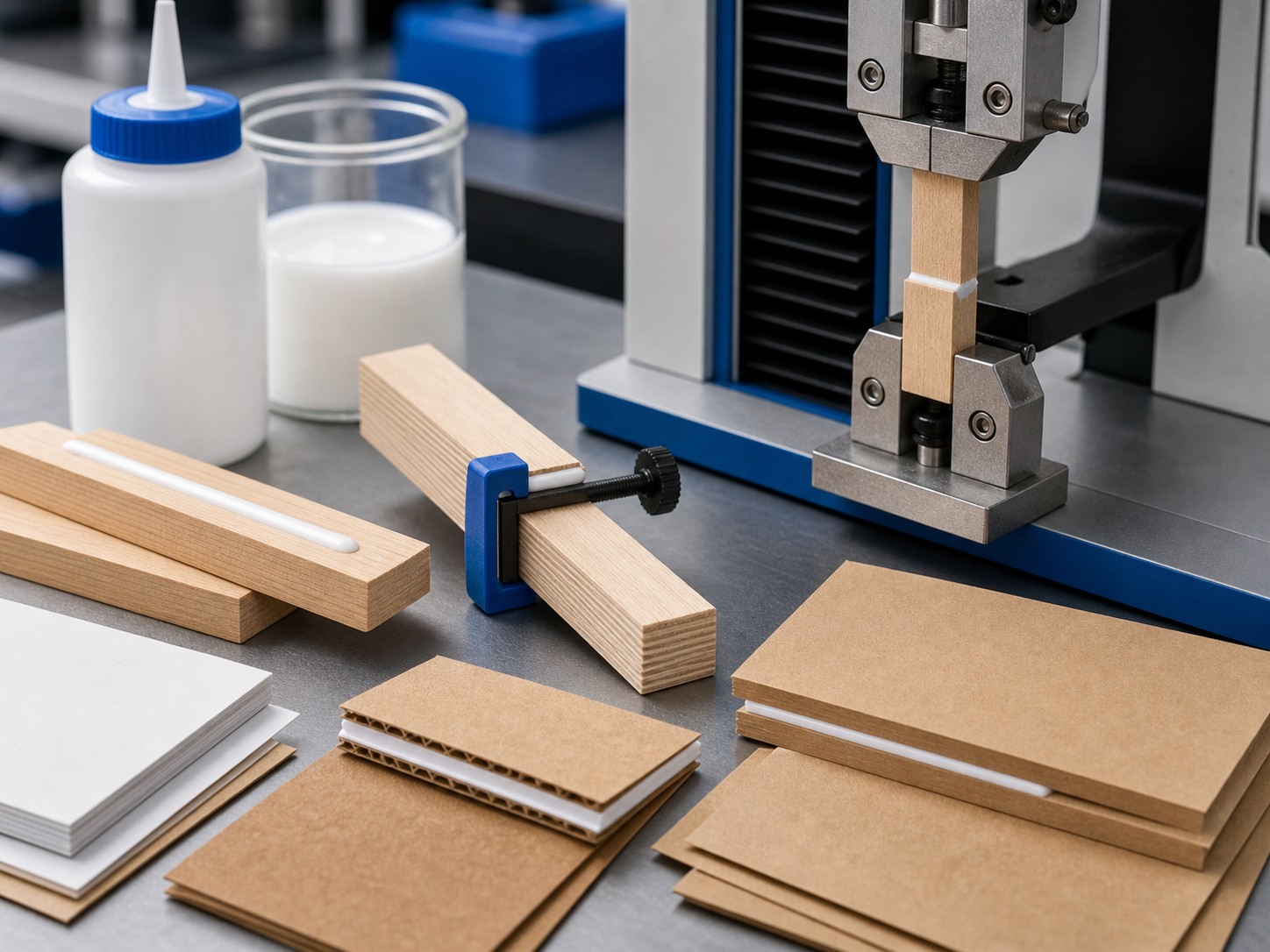
PVA can improve cohesive strength and film formation, but it does not replace proper formulation work. Substrate porosity, moisture content, open time, dry time, press conditions and plasticizer selection can change the result dramatically.
- For wood and paper: test penetration, wet tack, dry bond strength and aging behavior.
- For packaging: check blocking, heat resistance, odor requirements and recyclability expectations.
- For re-moistenable glue: balance resolubility with film strength and storage stability.
Emulsion stability
Why PVA grade selection matters in emulsions
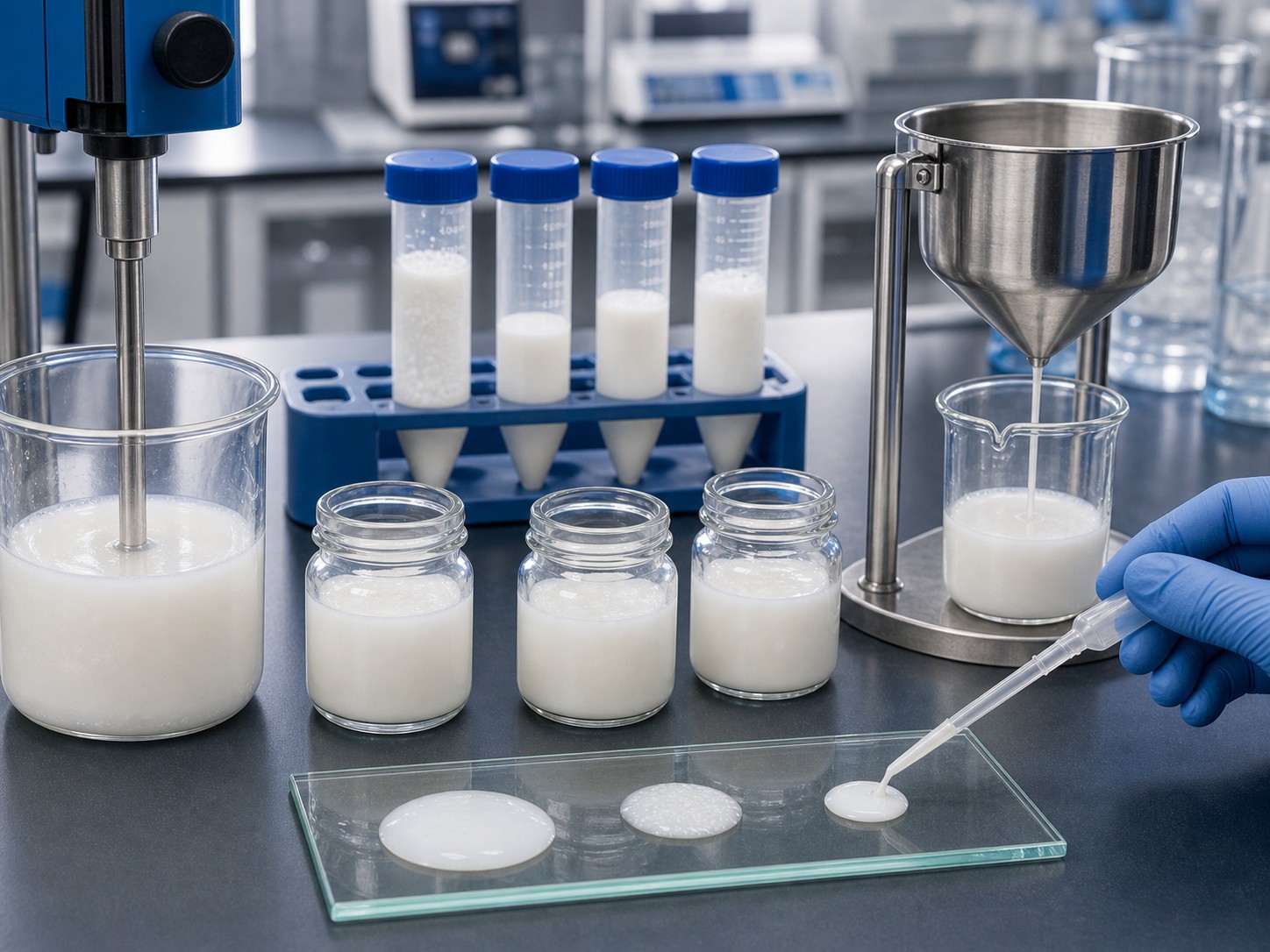
As a protective colloid, PVA can help stabilize polymer particles during and after emulsion polymerization. The wrong grade may create excessive viscosity, poor dilution tolerance, unstable storage or weak adhesive films.
A useful screening program should include polymerization stability, viscosity drift, freeze-thaw behavior where relevant, mechanical stability, particle size, film clarity and adhesive performance on the target substrate.
Grade selection
Candidate Joyforce PVA grades to screen
The source application page lists several candidate grades for adhesive and emulsion uses. Treat the list below as a starting point for laboratory screening, not a final specification.
| Use case | Candidate grade direction | What to validate |
|---|---|---|
| General adhesive binder | Partially hydrolyzed grades such as 0588, 1788, 2088 or 2488 may be screened. | Solution viscosity, tack, drying profile, film strength and substrate penetration. |
| High-strength or water-resistant adhesive systems | Fully hydrolyzed grades such as 1799 or 2499 may be considered where higher crystallinity is useful. | Dissolution temperature, bond strength, water sensitivity and compatibility with additives. |
| PVAc emulsion and protective colloid use | Grade selection should be matched to polymerization recipe and target viscosity. | Polymerization stability, particle size, viscosity drift and storage performance. |
| Suspension polymerization | Specialized PVA grades may be screened as dispersants or stabilizers. | Particle morphology, residual monomer process targets and batch consistency. |
Content review
What was refined from the source page?
- Broad claims were rewritten as formulation-dependent statements.
- Grade names were kept as screening references, not final recommendations.
- The article adds validation criteria that buyers and technical teams can use in real conversations.
FAQ
PVA adhesives and emulsion questions
Is PVA the same as PVAc adhesive?
No. PVA is polyvinyl alcohol, while PVAc is polyvinyl acetate. PVA may be used in PVAc emulsion adhesive systems as a protective colloid or formulation component, but they are different materials.
Which PVA grade is best for adhesive use?
There is no universal best grade. Start with hydrolysis level, viscosity and dissolution behavior, then validate bond strength, open time, dry time, storage stability and substrate compatibility.
Can PVA improve water resistance?
Fully hydrolyzed grades may improve film strength and lower cold-water solubility compared with partially hydrolyzed grades, but water resistance depends on the full adhesive formulation and should be tested.
What information should be shared with Joyforce?
Share the adhesive type, target solids, viscosity, substrates, test method, open time, drying condition, required documentation and any regulatory or market constraints.
Related product information
Explore Joyforce PVA grade families
Partially Hydrolyzed PVA
Useful starting point where cold-water solubility, tack and emulsion compatibility are important. View product information.
Fully Hydrolyzed PVA
Often screened where stronger films or lower cold-water sensitivity are needed. View product information.
Special Modified PVA
Consider for specialized emulsion, dispersion or process requirements. View product information.
Next step
Need help narrowing the grade list?
Send Joyforce your adhesive or emulsion requirements. The team can help screen candidate PVA grades for laboratory validation.